Loading page content...

Loading page content...
Aimee Joe Fenny
Author
Discover why Dubai is attracting US & Canadian expats in 2025. Compare safety, taxes, cost of living, real estate ROI, visas, and quality of life vs the USA & Canada in this complete guide.
For decades, the American Dream has been a powerful global magnet, drawing millions in pursuit of prosperity and a better life. Yet, in a significant shift, a growing wave of professionals, entrepreneurs, and families from the United States and Canada are looking across the Atlantic, not westward, to redefine their future. They are trading familiar landscapes for the gleaming skyline of Dubai, a city that has meticulously engineered its own dream—one built on tax-free income, unparalleled safety, futuristic ambition, and staggering investment returns.
While the Burj Khalifa stands as a triumphant symbol of what Dubai has achieved, the real story for North American expats is happening at ground level: in the pristine streets, booming tech hubs, and luxurious communities that offer a compelling alternative to the challenges of life in the West. This comprehensive guide delves deep into the quality of life in Dubai versus the USA and Canada, moving beyond the iconic postcard views to provide a clear-eyed comparison of safety, finances, culture, and opportunity.
Whether you're seeking a higher return on your investments, a safer environment for your family, or a strategic career move in a booming IT sector, understanding why Dubai is becoming the destination of choice for Western expats is the first step in claiming your stake in one of the world's most dynamic cities.
The decision to relocate internationally is fundamentally a calculation about quality of life. For North Americans, this often means weighing cherished freedoms and familiar landscapes against tangible daily factors like financial security, personal safety, and convenience. Dubai presents a powerful case by offering a highly streamlined, secure, and financially advantageous lifestyle that directly addresses key pain points experienced in many US and Canadian cities.
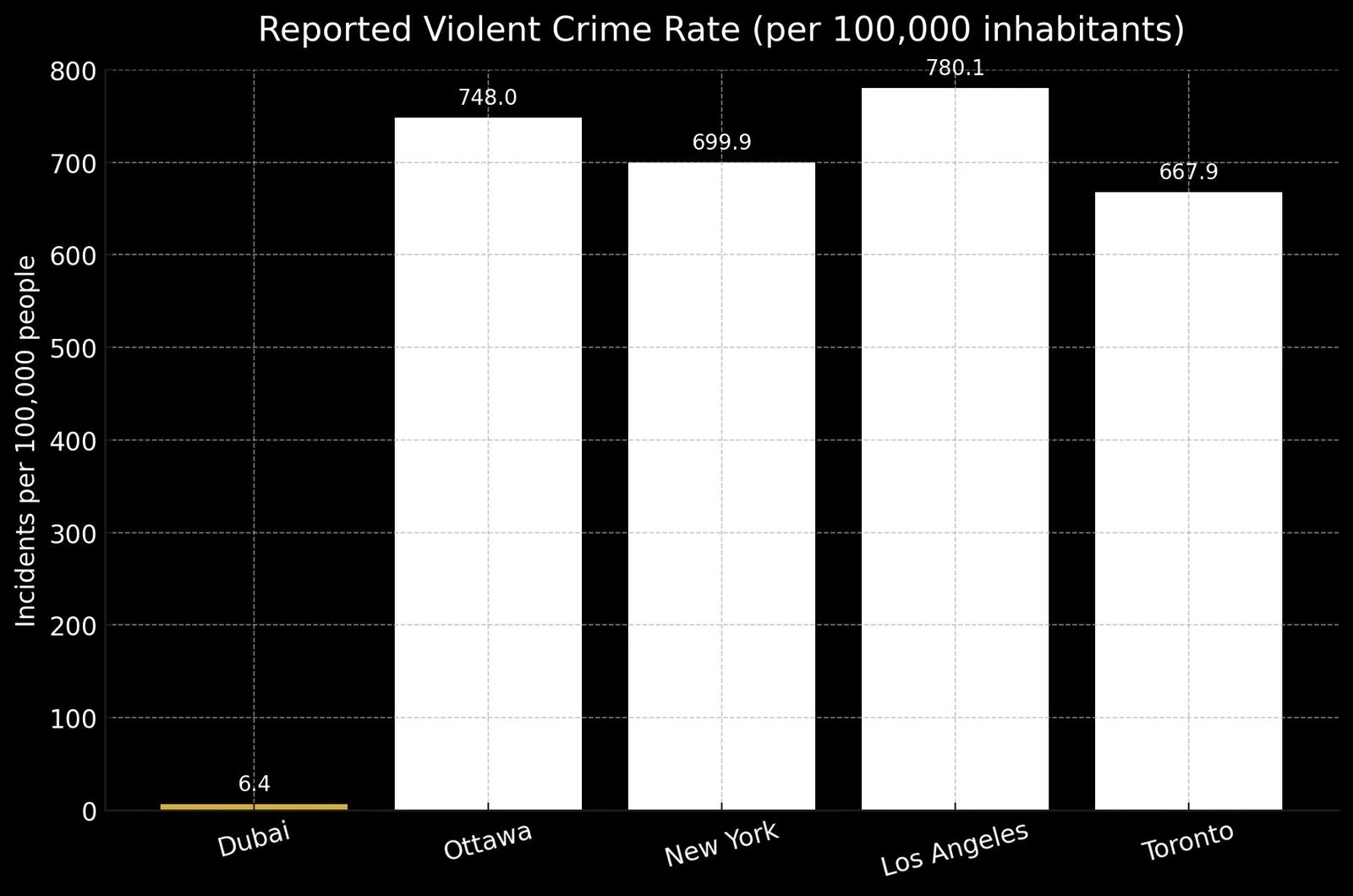
The most frequently cited reason for relocation among North American families is safety. Dubai is consistently ranked as one of the safest cities in the world for a reason. The emirate has near-zero rates of violent crime, gun violence, and petty theft. The legal system is strict and enforced consistently, creating a powerful deterrent effect. Residents commonly report feeling safe walking alone at night, and children enjoy a level of freedom that has become rare in many urban North American centers.
In stark contrast, despite its many virtues, the United States grapples with a significantly higher crime rate. According to the FBI's Uniform Crime Reporting program, property and violent crime rates per 100,000 inhabitants are orders of magnitude higher than in Dubai. While Canada boasts much safer statistics than the US, its major cities still experience higher rates of property crime, break-ins, and certain types of violent crime than Dubai. For parents and individuals seeking peace of mind, Dubai's safety record is not just a perk; it is a primary motivator.
The financial argument for moving to Dubai is arguably its most powerful lure. The UAE operates on a tax-free environment with:
This system dramatically increases disposable income and accelerates wealth building. To illustrate the impact, consider a professional earning $150,000 USD annually. In a high-tax state like California or New York, their effective tax rate could easily be 30-35%, meaning they take home roughly $100,000.
In Dubai, they take home the full $150,000 (or its AED equivalent), a life-changing difference that can be channeled into investments, savings, or a higher standard of living. While the UAE has implemented a 5% Value Added Tax (VAT) on most goods and services, this is still vastly lower than sales taxes in North America and is negligible compared to the savings from zero income tax.
The cost of living in Dubai is a complex topic that often surprises newcomers. It is not a universally cheap city, but a nuanced one where some things are significantly less expensive, while others are on par or more costly than in North America.
Relocating is more than a financial calculation; it's about building a fulfilling daily life. Dubai offers a unique blend of ultra-modern convenience, staggering cultural diversity, and family-friendly amenities, albeit within a distinct cultural framework that requires understanding and adaptation.
Dubai is a true global melting pot. Over 90% of its population are expatriates from over 200 nationalities. This creates an incredibly open and tolerant social environment where newcomers are the norm. You will find restaurants, cultural festivals, and social groups representing every corner of the globe. English is the lingua franca of business and daily life, making integration seamless for North Americans.
However, it is crucial to understand and respect the local conservative culture that underpins this diversity. The UAE is a Muslim country with laws and customs that differ from the liberal values of North America. Public displays of affection are frowned upon, dress code is modest in public places (though liberal within hotels and resorts), and during the holy month of Ramadan, eating, drinking, or smoking in public during daylight hours is prohibited by law.
For most, these rules become a minor adjustment in exchange for safety and stability, but acknowledging this cultural context is essential for a smooth transition.
Dubai is a paradise for consumers and families seeking top-tier amenities.
The city is home to some of the world's largest and most luxurious shopping malls, featuring every world-class brand and franchise imaginable. Beyond retail, these malls host massive indoor theme parks, ice rinks, aquariums, and countless entertainment options. The tourism infrastructure is second to none, with pristine beaches, championship golf courses, and fine dining from celebrity chefs.
The landscape views offer a dramatic contrast: from the sparkling Persian Gulf to the majestic dunes of the desert, all within a short drive. The city's commitment to being neat and clean is evident everywhere, with impeccable public spaces and efficient waste management.
Daily life in Dubai is designed for convenience.
The public transport system, especially the Dubai Metro, is modern, air-conditioned, clean, and safe, connecting major hubs across the city. Traffic rules are strict and rigorously enforced by cameras, leading to generally disciplined driving behavior compared to the unpredictability of many North American roads. The most significant environmental challenge is the extreme heat during the summer months (May-September), where temperatures regularly exceed 40°C (104°F).
Life adapts by moving indoors; cars, homes, malls, and metros are all heavily air-conditioned, making the summer manageable.
Dubai has strategically pivoted from an oil-based economy to a diversified knowledge and tourism hub. This vision has created fertile ground for professionals and investors from around the world.
The government's vision to become a global tech hub has materialized rapidly. Dubai Internet City is a thriving cluster for multinational tech giants like Microsoft, Google, IBM, and LinkedIn, as well as hundreds of startups. Initiatives like the Dubai Metaverse Strategy and the annual GITEX technology draw global talent. For North American tech professionals, this represents a vibrant job market with tax-free salaries, often with attractive benefits packages. The emergence of a strong IT sector provides a compelling career path without the volatility of the US H-1B visa process.
The real estate investment market in Dubai is a primary draw for North Americans. Investment high ROI is a key feature, with rental yields typically ranging from 5% to 7% for apartments and 4% to 5% for villas—figures that significantly outpace the 2-4% averages in most major US and Canadian cities.
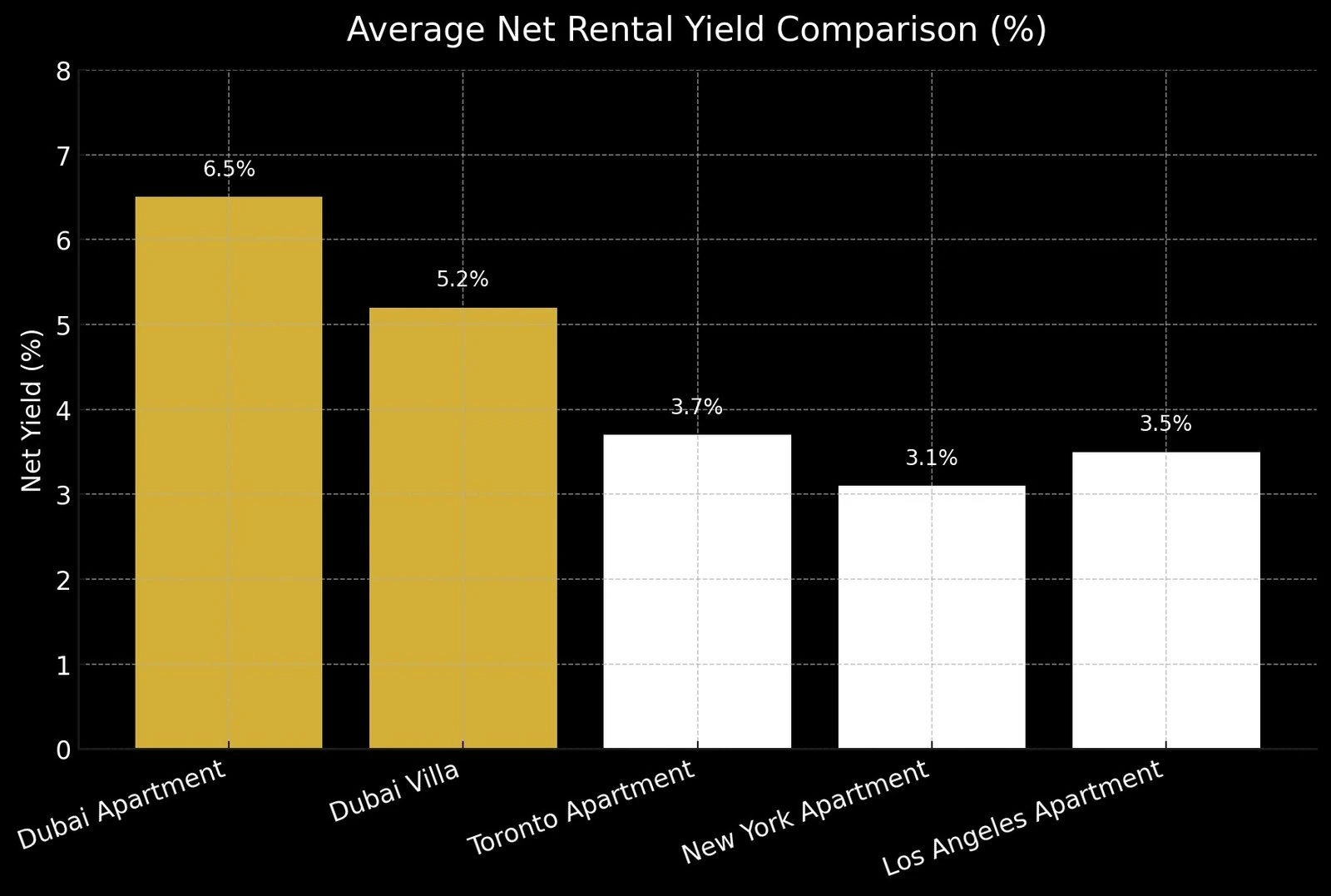
Furthermore, property investment is directly linked to residency. Purchasing a property worth at least AED 1 million (approx. $272,000 USD) can make an investor eligible for a renewable residence visa. A purchase of AED 2 million or more makes investors eligible for the coveted 10-year Golden Visa, providing long-term stability and negating the need for a company sponsor. This pathway is far more straightforward and secure than the complex visa process for property investors in the USA.
While the USA and Canada have a wider array of public higher educational options, Dubai caters to its expat population with an exceptional ecosystem of private education. Dubai Academic City hosts branches of renowned universities like NYU, University of Wollongong, and Middlesex University. For younger children, there are over 200 private international schools offering curricula from around the world (IB, British, American, Indian).
While this is a significant expense for families, the quality is exceptionally high, often surpassing the standards of public schooling in North America.
Dubai refuses to rest on its laurels. The city's leadership is perpetually focused on the next groundbreaking project, ensuring its status as a global hub for the future.
While the Burj Khalifa holds the current record, Dubai is already constructing its next marvel. The Dubai Creek Tower in the Dubai Creek Harbour development is poised to become the longest building than Burj Khalifa and the tallest structure in the world upon completion.
Designed by Santiago Calatrava, its sleek, needle-like form evokes a minaret and a lily flower, paying homage to local culture while pushing architectural boundaries. It represents more than just a building; it symbolizes the city's relentless ambition and its commitment to being a leader in innovation, tourism, and high-tech design.
For investors, being near such iconic projects often translates to significant long-term capital appreciation.
The government's strategy is a holistic one.
Goals to attract over 25 million tourism visitors annually are backed by the continuous development of new attractions, museums, and entertainment venues. The city's reputation for being neat and clean is actively maintained by municipal authorities. Furthermore, visions like the Dubai 2040 Urban Master Plan and the aforementioned Metaverse strategy ensure the city is not just building taller, but smarter, aiming to be a world leader in sustainability and artificial intelligence.
The choice between life in Dubai versus North America is not about which is objectively better, but which is better for you at this specific chapter of your life. Dubai offers a compelling proposition: a secure, luxurious, and financially efficient lifestyle within a dynamic, future-focused city. It is ideal for those seeking to maximize their earnings, invest in a high-growth market, enjoy world-class amenities, and provide a safe environment for their family, all within a truly international community.
It requires, however, a respect for local customs and an acceptance of its climate and transitory nature.
For North Americans, the move to Dubai is less about abandoning the values of home and more about augmenting their life with the unique opportunities this extraordinary city-state provides. It represents a strategic choice for building wealth and experiencing a different, highly convenient pace of life.
Q: Can a US citizen own a house in Dubai?
A: Absolutely! US citizens have the same full ownership rights as any other foreign national in Dubai's designated freehold areas.
Q: Is it wise to buy property in Dubai?
A: Yes, it is considered a very wise investment due to high rental yields, strong capital appreciation potential, and a stable, transparent market.
Q: Can you own 100% property in Dubai?
A: Yes, you can own 100% of both the property and the land it's on in designated freehold areas, which include most major communities.
Q: How much money do you need to buy a house in Dubai?
A: You can find excellent apartments starting from around $200,000, with down payments for mortgages as low as 20% for expats.
Q: Can a US citizen own property in Dubai?
A: Yes, definitely. The Dubai property market is fully open to and welcomes US citizen investors.
Q: Can a US citizen live in Dubai permanently?
A: While there's no "permanent" citizenship, buying a property worth AED 1M+ makes you eligible for a renewable long-term residence visa, providing stability.
Q: How long can you stay in Dubai if you own a property?
A: Property ownership makes you eligible for a residence visa, allowing you to live in Dubai for the duration of the visa, which is typically 2, 5, or 10 years and is renewable.
Q: Can US citizens buy property in Dubai?
A: Yes, US citizens are among the top international investors in Dubai's real estate market.
Q: What happens to your property in Dubai after 99 years?
A: This only applies to rare leasehold properties. The vast majority of properties for foreigners are freehold, meaning you own it outright forever.
Q: Why are houses in Dubai so cheap?
A: Compared to major global cities like NYC or London, Dubai offers exceptional value per square foot, making luxury living more accessible.
Q: Is it better to buy or rent property in Dubai?
A: With high rental yields, buying is often a smarter financial decision as your investment works for you, unlike rent which is an expense.
Q: Why do so many wealthy people want to buy property in Dubai?
A: They are attracted by the tax-free wealth growth, high ROI, political stability, luxury lifestyle, and secure long-term visa options.
Q: Can a foreigner have 100% property ownership in Dubai?
A: Yes, 100% foreign ownership is not only allowed but is the standard in Dubai's freehold areas.
Q: What happens after a 99-year lease in Dubai?
A: For leasehold properties, the lease is typically renewed, ensuring continuity. Most investors choose freehold for perpetual ownership.
Q: How much money do I need to buy a property in Dubai?
A: Beyond the purchase price, you should budget approximately 6-8% for closing costs, including a 4% DLD fee.
Q: Is $5000 enough to live in Dubai?
A: Yes, a monthly budget of $5,000 can afford a comfortable lifestyle for a single person or couple, including a nice apartment in a good community.
Q: How much does an average house cost in Dubai?
A: "Average" varies by type. A good quality 2-bedroom apartment in a prime area can start from around $400,000, offering excellent value.
Q: What is the minimum salary for a mortgage in Dubai?
A: Banks typically look for a minimum monthly salary of AED 15,000-20,000 (~$4,000-$5,500), but this can vary.
Q: How much is a downpayment in Dubai?
A: For expats, the standard down payment is a minimum of 20% for properties under ~$1.36M (AED 5M), making entry into the market very achievable.

Let our experts guide you through Dubai's luxury property market with personalized advice
Continue exploring insights about Dubai's real estate market