Loading page content...
Hien Htet
Author
Dubai’s real estate market may be stabilizing, but experienced investors are still seeing massive returns. Discover why infrastructure, end-user demand, and strategic buying are driving the next wealth cycle in Dubai property.
Dubai’s real estate market is no longer behaving like the emotional, momentum-driven market it was during the post-pandemic surge.
The easy flipping phase is fading. Buyers are negotiating harder. Off-plan launches are taking longer to sell out. Secondary market sellers are reducing prices for the first time in years.
Yet despite all of this, experienced investors are still quietly building enormous wealth across Dubai.
That contradiction is exactly what most people are failing to understand.
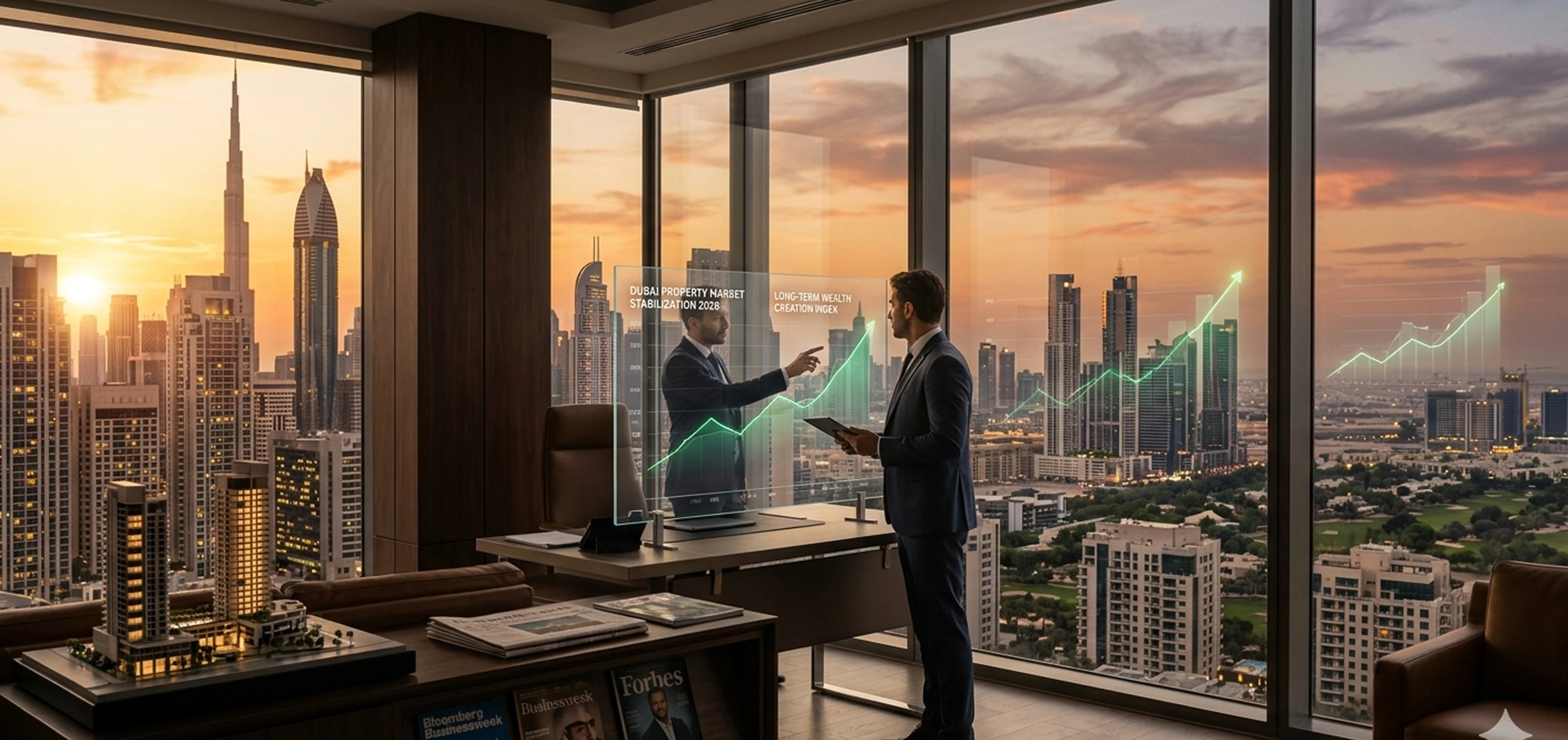
What many are calling a “slowdown” is not a collapse. It is the transition of Dubai real estate from a speculative trade into a mature, infrastructure-driven investment market.
And historically, those transition periods are where the biggest fortunes are created.
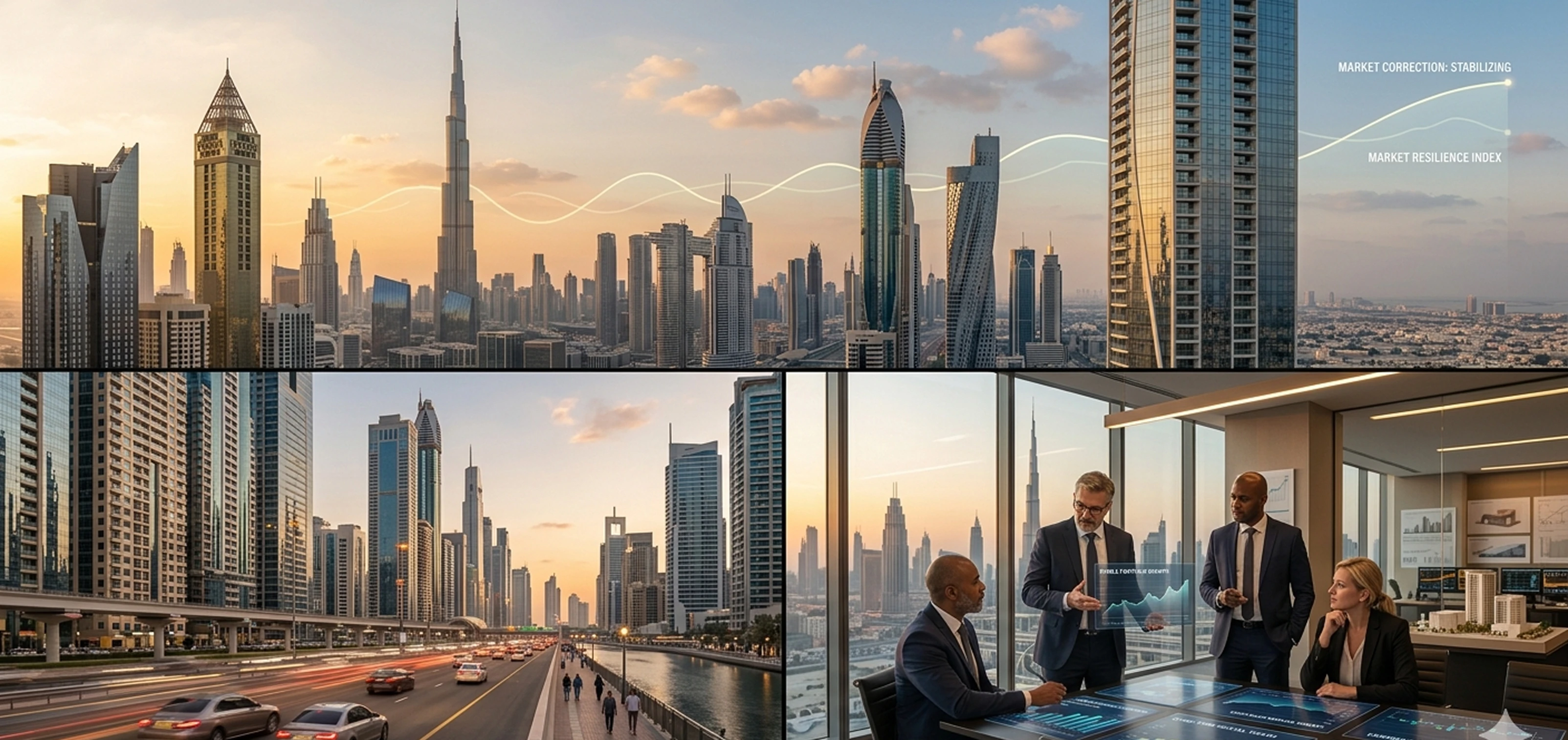
The biggest mistake investors are making in 2026 is waiting for a 2008-style crash that may never arrive.
Dubai today is fundamentally different from the Dubai of the previous cycle.
The market is now heavily supported by end-users, long-term residents, institutional investors, and Golden Visa-driven demand. Owners are sitting on significantly higher equity positions, and forced selling remains extremely limited.
“We aren't seeing a bubble burst; we are seeing a market mature.”
That distinction matters.

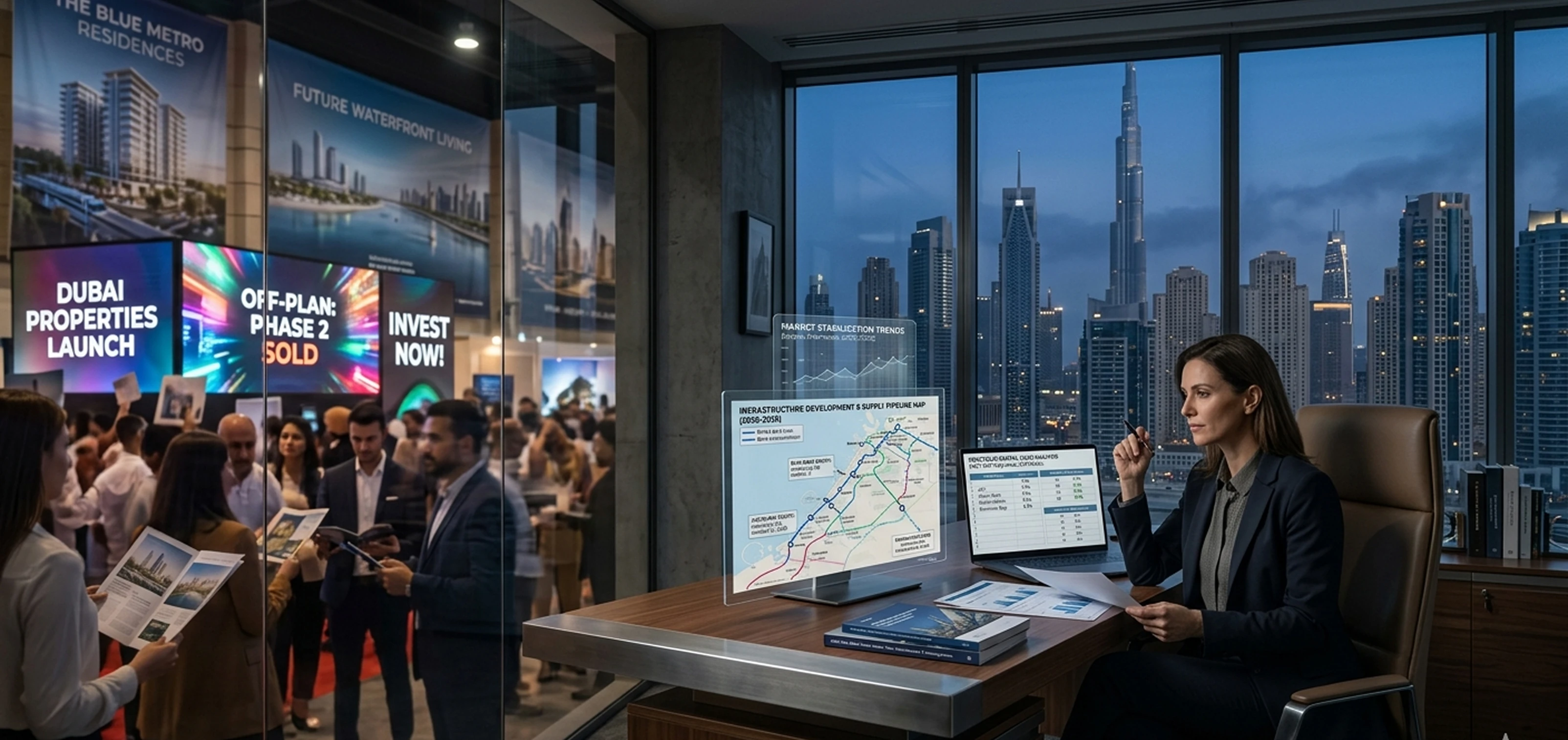
Yes, the market is softening across both secondary and off-plan segments — but for completely different reasons.
In the secondary market, prices are correcting because speculative premiums have disappeared. Sellers who benefited from aggressive appreciation between 2021 and 2024 are now competing against a large wave of new handovers and increasingly analytical buyers.
At the same time, financing costs remain elevated, making negotiation power return to buyers for the first time in years.
The off-plan market, however, is behaving differently.
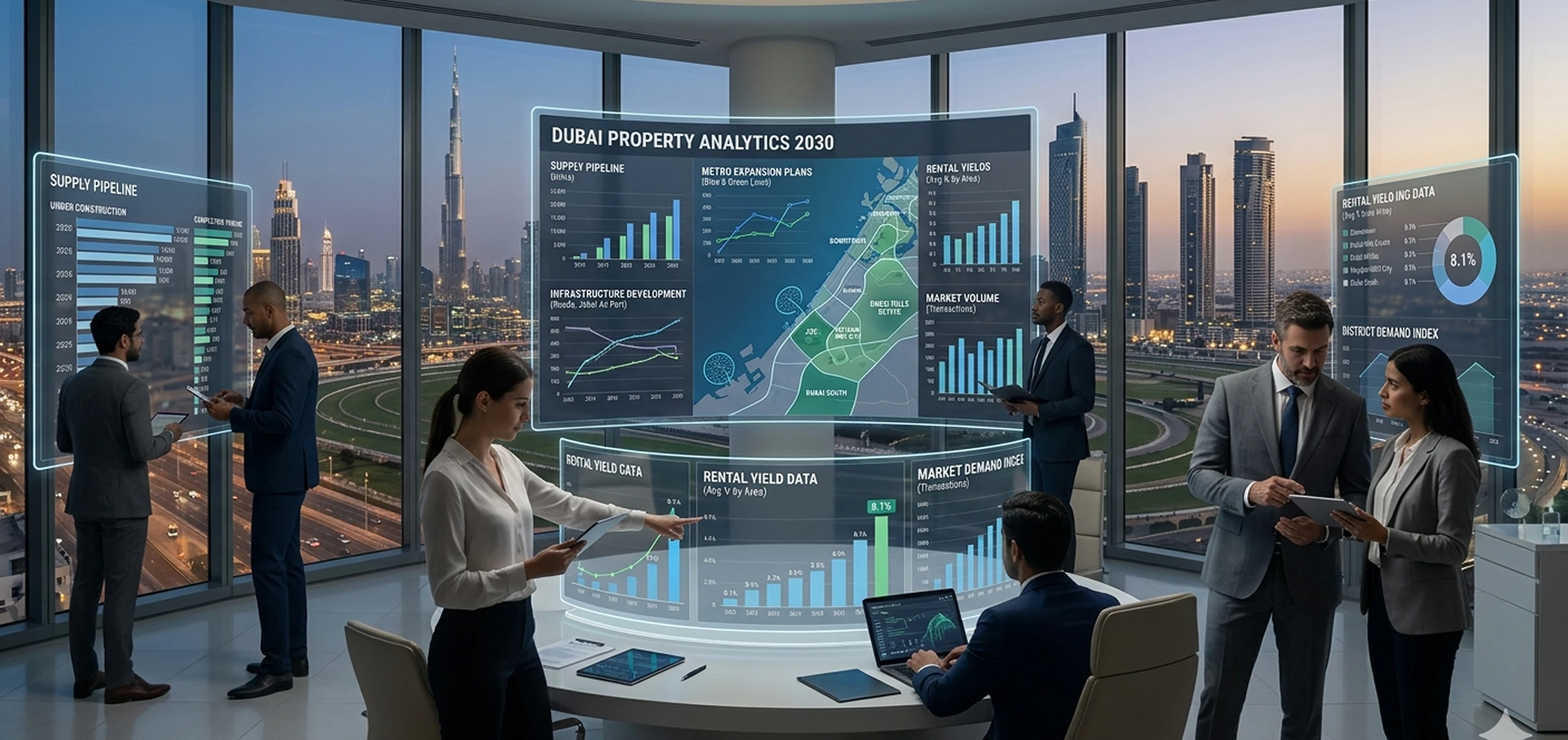
Demand remains dominant, accounting for nearly 70% of transactions, but the pace has changed. Instead of emotional buying and instant sell-outs, investors are now scrutinizing developer quality, supply pipelines, infrastructure timelines, and long-term rental demand.
The market is no longer rewarding random buying.
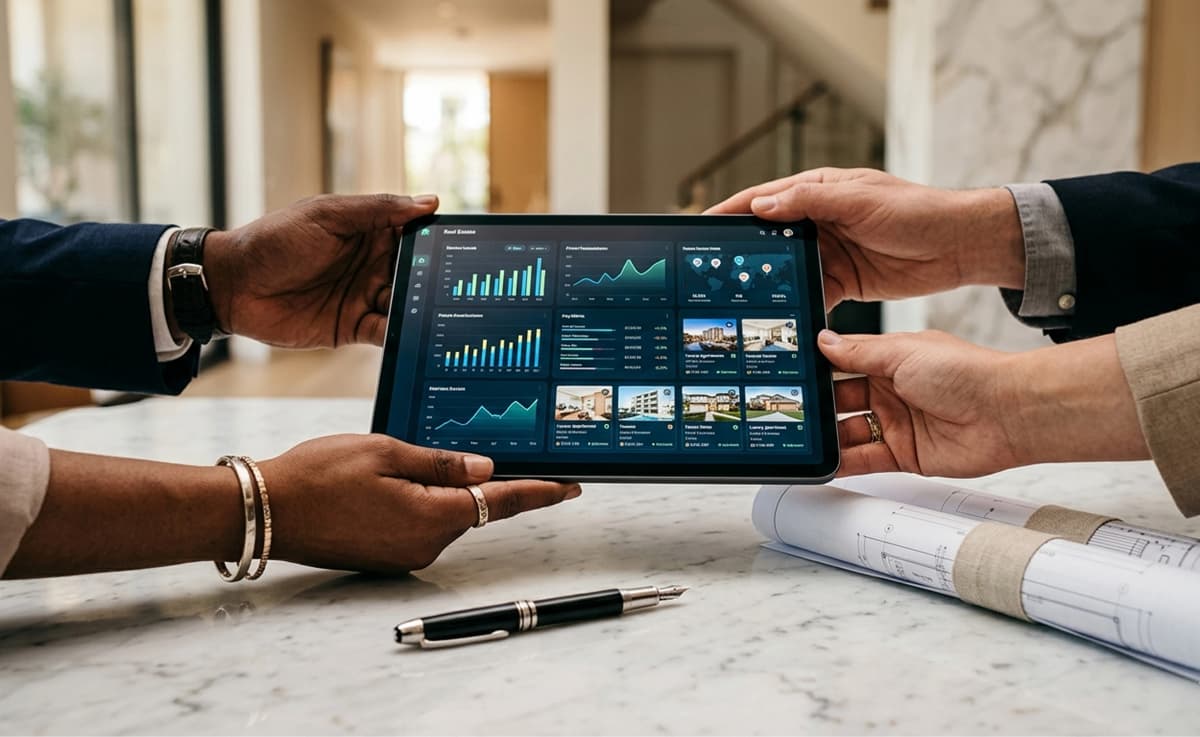
“Data has replaced hype as the primary driver of Dubai’s capital appreciation.”
The psychology of buyers in 2026 is dramatically different from previous years.
During the peak cycle, investors bought based on momentum and fear of missing out. Today, buyers are trapped in what can best be described as analytical hesitation.
Their biggest fear is no longer a market crash.
It is stagnation.
Investors are terrified of buying “just another unit” in an oversupplied area that struggles to appreciate or rent quickly.
This is why infrastructure has become the most important investment variable in Dubai real estate.
“Infrastructure is the only lead indicator that never lies.”
The investors still doubling money in Dubai are not chasing brochures or launch hype.
They are buying ahead of infrastructure.

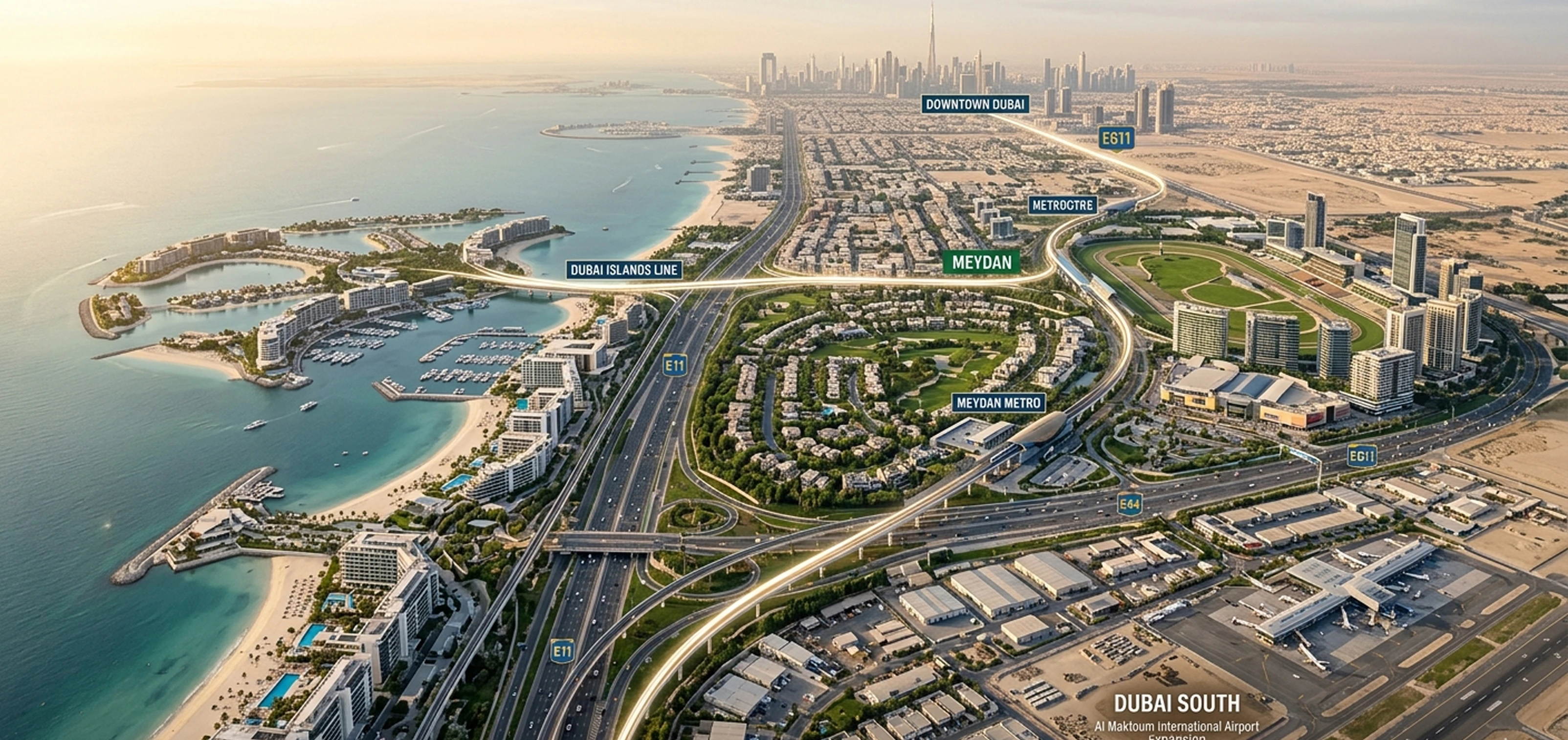
The next growth cycle in Dubai is increasingly being shaped by infrastructure milestones tied directly to the Dubai 2040 Urban Master Plan.
The AED 128 billion expansion of Al Maktoum International Airport is arguably the single biggest long-term catalyst in the UAE today.
As operations gradually shift toward Dubai South, the area is transforming from a speculative concept into a future economic center powered by aviation, logistics, commerce, and population migration.
Investors who understand infrastructure cycles are already positioning themselves before the full operational impact is reflected in prices.

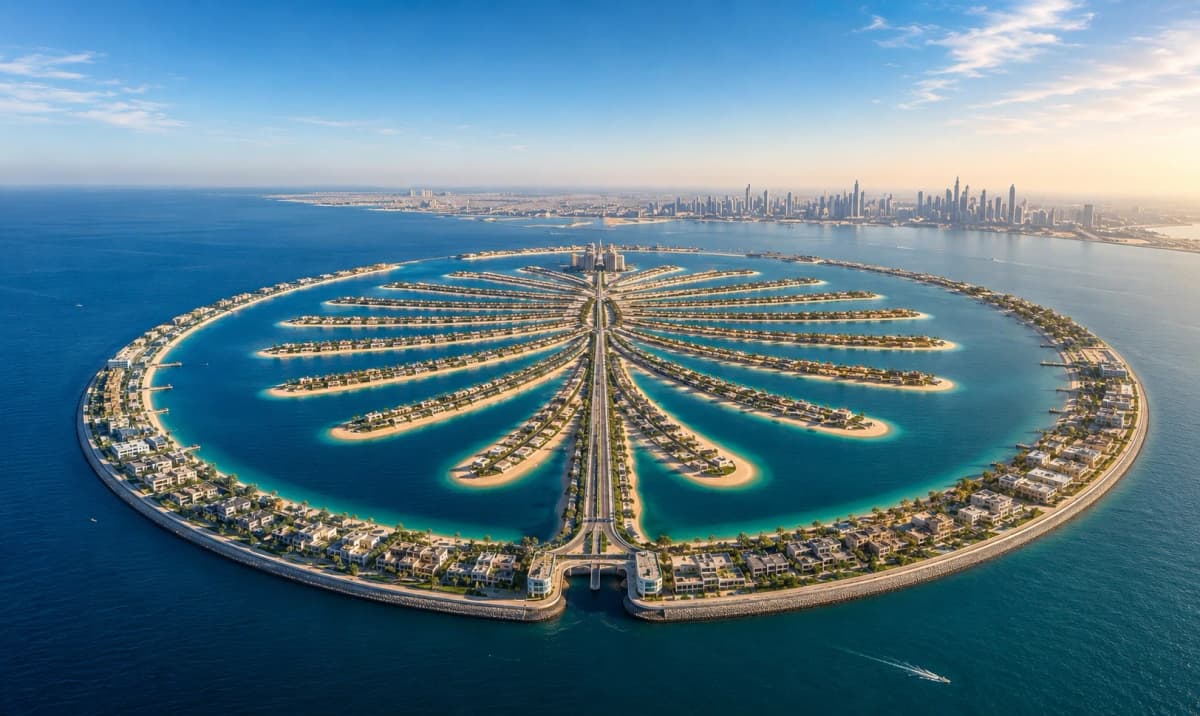
Dubai Islands is rapidly becoming the modern equivalent of entering Palm Jumeirah before its maturity cycle.
With 20 kilometers of beachfront, luxury hospitality expansion, marinas, and branded residences, the area is attracting investors targeting long-term scarcity value.
The Blue Line Metro expansion is already reshaping pricing behavior across Meydan and surrounding districts.
Properties near transit nodes are beginning to command operational premiums long before completion.
This is a classic infrastructure pricing cycle.
Investors who buy before transportation becomes fully operational historically capture the strongest appreciation phase.
“Wait for the headline, and you’ve already paid the premium.”
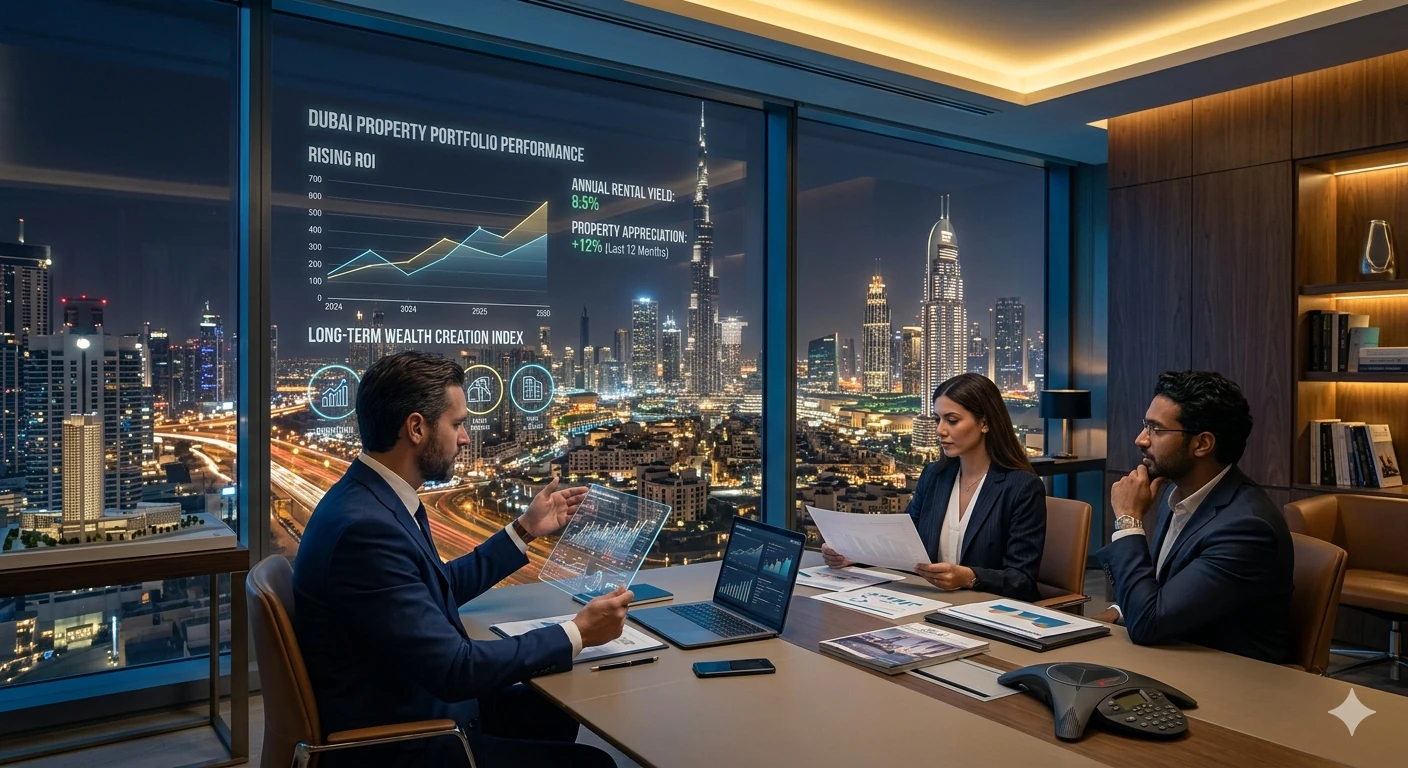
The strongest proof that Dubai’s market remains healthy can be seen through actual investor performance over the past five years.
One investor acquired a four-bedroom villa in Sidra, Dubai Hills Estate, during 2021 for AED 3.8 million.
By 2026, the property value surpassed AED 7.5 million.
The investment thesis was simple: the pandemic permanently accelerated demand for larger family-oriented communities with green spaces, schools, and infrastructure.
Dubai Hills evolved from a premium community into what many now consider Dubai’s new residential center.
Another investor purchased a one-bedroom apartment near Expo City in 2023 for AED 650,000.
Following the airport expansion announcement and Blue Line development momentum, the property appreciated to approximately AED 950,000 by 2026 while generating more than 8% rental yield.
The market eventually caught up to the infrastructure story.
A distressed apartment in Dubai Silicon Oasis was acquired in 2024 shortly after the Metro Blue Line announcement.
As construction milestones advanced, both rental demand and property values accelerated significantly.
This is the exact pattern sophisticated investors repeatedly exploit in Dubai.
They buy before convenience becomes visible.

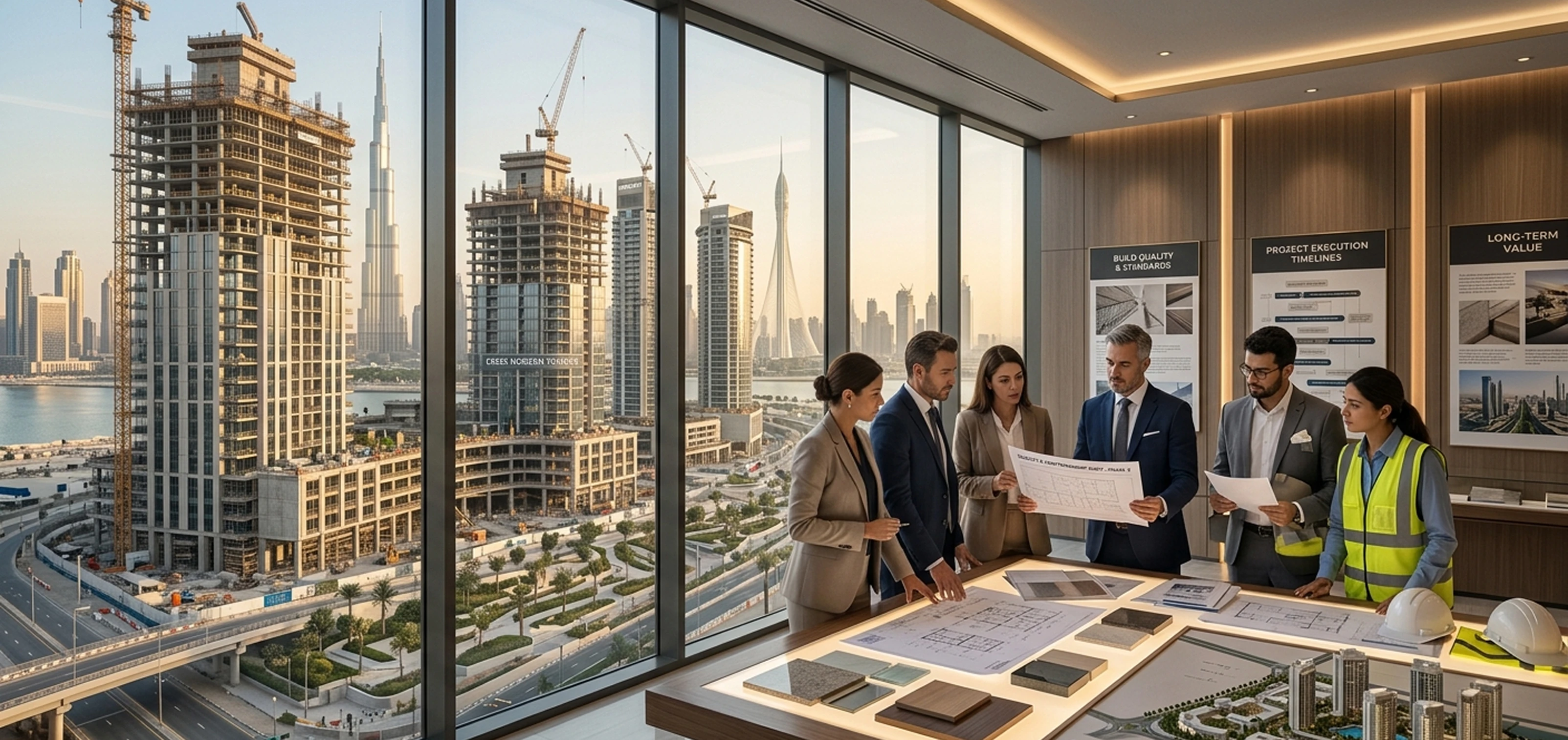
In a slowing market, developer reputation becomes one of the most powerful forms of risk protection.
Today, investors are increasingly prioritizing developers that control community quality, maintenance standards, delivery timelines, and long-term resale liquidity.
Emaar remains the “safe haven” developer because of its master-planned ecosystems and resale liquidity.
Sobha Realty continues dominating among end-users because of its vertically integrated construction model and long-term build quality.
Binghatti Developers has positioned itself as one of the strongest yield-focused developers through aggressive pricing and rapid delivery timelines.
Nakheel still controls some of Dubai’s most valuable waterfront scarcity assets, while Damac Properties remains highly active in branded luxury and lifestyle-driven communities.
In 2026, trust is no longer built through marketing alone.
It is built through execution.

One of the most dangerous behaviors still dominating Dubai real estate today is what many professionals call “launch addiction.”
Buyers continue chasing flashy brochures and social media hype while ignoring the fundamentals that actually determine long-term ROI.
It is increasingly common to see investors overlook:
just to secure allocation in a trendy launch.
But the market is evolving.
“The easy money phase is over. The intelligent money phase has begun.”
The investors who outperform over the next five years will likely be those focusing on:
rather than speculation alone.

Despite softer pricing momentum, Dubai continues to maintain structural advantages that many global cities simply cannot replicate.
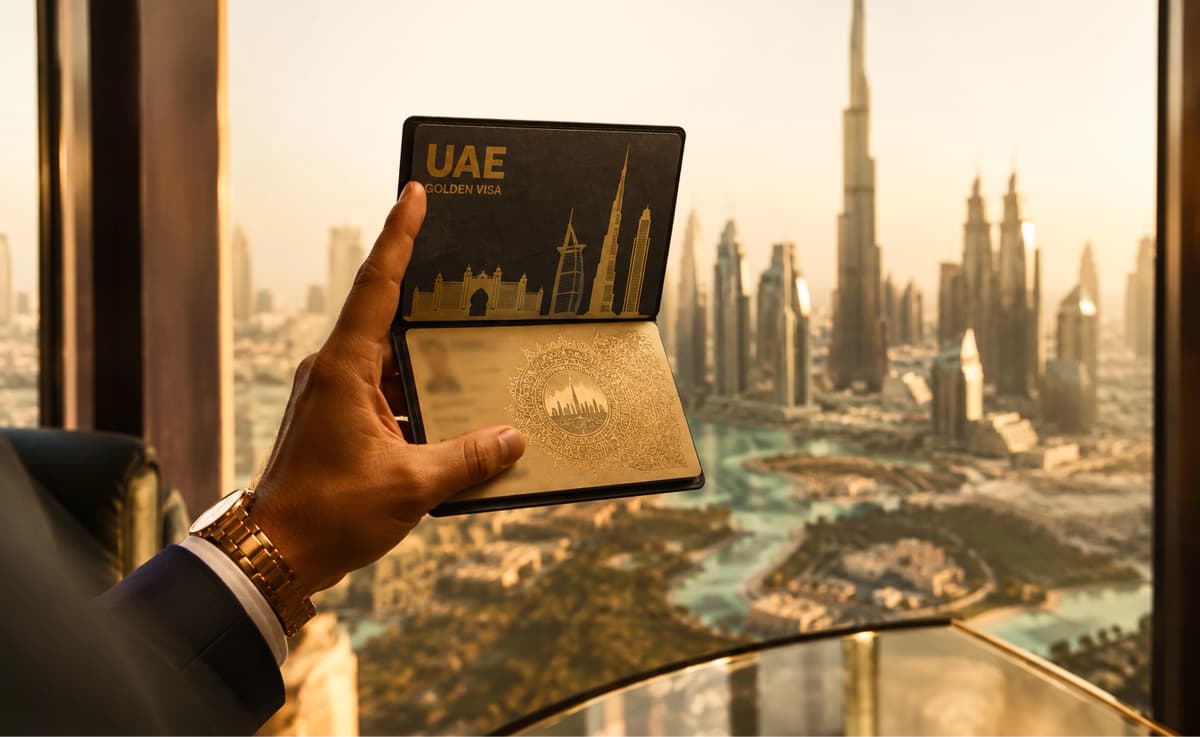
The Golden Visa transformed Dubai from a transient investor market into a long-term end-user ecosystem.
Population growth continues accelerating.
Global wealth migration remains strong.
Tax efficiency, safety, infrastructure spending, and business-friendly regulation continue attracting entrepreneurs, families, and institutional capital.
Most importantly, Dubai still has something many mature cities no longer possess:
room to grow.
“Master-plans create value; standalone towers merely capture it.”
Volatility is normal in any growth market.
But volatility alone does not define risk.
Weak fundamentals define risk.
And Dubai’s long-term fundamentals remain deeply intact.
The market today is not rewarding emotion, hype, or impatience.
It is rewarding strategy.
The investors quietly building wealth in 2026 are not necessarily the loudest people in the room.
They are the ones studying infrastructure maps, understanding supply cycles, negotiating intelligently, and holding through uncertainty.
Because in Dubai real estate, profit is often made at the purchase.
But wealth is built during the hold.
Let our experts guide you through Dubai's luxury property market with personalized advice
Market InsightDiscover how the Dubai Metro Gold Line will impact real estate prices, rental yields, and investment opportunities in Dubai.