Loading page content...

Loading page content...
Aimee Joe Fenny
Author
Buy property in Dubai as a foreigner with confidence. Learn freehold areas, legal rules, step-by-step buying process, Golden Visa eligibility, costs, mortgages, and ROI for global investors.
The glittering skyline of Dubai is more than just an architectural marvel; it represents one of the world’s most dynamic, secure, and profitable real estate markets. For international investors and expatriates from the UK, Canada, the USA, and across the globe, buying property in Dubai as a foreigner offers a unique combination of high rental yields, capital appreciation, a tax-free environment, and a pathway to long-term residency. However, navigating a foreign property landscape can seem daunting.
This comprehensive guide is designed to demystify the entire process, providing you with the expert knowledge and practical steps needed to make a confident and successful investment in Dubai real estate for foreigners. We will cover everything from legal frameworks and financial considerations to the step-by-step property buying process in Dubai, ensuring you are fully equipped to embark on this exciting journey.
This is the fundamental question for every international investor, and the answer is a resounding yes. The government of the United Arab Emirates explicitly allows foreign nationals to acquire freehold ownership of property in designated areas. This policy was established to encourage long-term investment and stimulate the economy, transforming Dubai into a global hub for business and luxury living.
The legal foundation for foreign ownership is outlined in Dubai Law No. (7) of 2006, concerning real estate registration in the Emirate of Dubai, which grants non-UAE nationals the right to own freehold properties in Dubai.

For international buyers, understanding the distinction between freehold and leasehold ownership is critical.
For the purpose of investing in Dubai real estate, foreign nationals should primarily focus on the designated freehold areas, as they offer the greatest flexibility and long-term security.
The Government of Dubai has designated specific zones where foreign ownership is permitted. These areas are among the most popular and well-developed communities in the city, offering a wide range of residential, commercial, and retail properties. Here is a comprehensive list of key freehold areas in Dubai:
This list is not exhaustive but covers the primary areas where foreign investment is concentrated. Each area caters to a different demographic and investment strategy, from high-yield rental apartments to premium capital growth villas.
The process of acquiring real estate in Dubai is remarkably streamlined and transparent, especially when compared to many Western countries. It is designed to protect both the buyer and the seller. Here is a detailed, step-by-step breakdown of the property buying process in Dubai.
The first step is to engage a trusted real estate agency, like House & Hedges, that is registered with the Dubai Land Department (RERA).
A good agent will understand your requirements, budget, and investment goals to shortlist suitable properties. Once you find a property you wish to purchase, you will make a verbal offer through your agent, which is then negotiated with the seller's agent. Upon agreeing on a price and terms (e.g., payment plan, inclusion of furnishings, move-in date), the process moves to the formal stage.
Due diligence is a non-negotiable part of buying property in Dubai as a foreigner.
Your agent will help you obtain a title deed transcript from the DLD to confirm the seller is the legitimate owner and that the property is free of any encumbrances, mortgages, or legal disputes. If the property is in a building, you must also obtain a No Objection Certificate (NOC) from the building's management company or homeowners' association. The NOC confirms that all service charges on the property are paid up to date by the current owner. This step is crucial to avoid inheriting any hidden liabilities.
Once due diligence is complete, the buyer and seller sign a formal sales agreement called the Memorandum of Understanding (MOU), also known as the Form F. This legally binding contract outlines the final agreed-upon price, payment schedule, and completion date. At this point, the buyer is typically required to pay a security deposit, usually 10% of the purchase price, to the seller's real estate agency.
This deposit is held in escrow and is forfeited if the buyer pulls out of the deal without a valid reason. The MOU protects all parties and formally takes the property off the market.
The final step is the execution of the sale at the DLD. Both parties (or their legally appointed Power of Attorney holders) must be present at the DLD office or can complete the process through a trusted representative. The buyer must transfer the remaining purchase funds to the seller, usually through a manager's cheque or bank transfer.
The DLD will then cancel the existing title deed and issue a new one in the buyer's name. This process is efficient and often completed within a day.
The DLD charges a transfer fee, which is 4% of the purchase price, plus a minor administrative fee (AED 580). This fee is typically paid by the buyer unless otherwise negotiated. Upon payment and registration, you become the official, legally recognized owner of the property.
Understanding your financial options is a cornerstone of a successful property investment. While a significant number of transactions in Dubai are cash-based, mortgages for non-residents are readily available for qualified applicants.
Yes, many local and international banks in the UAE offer mortgage products to non-resident foreigners. However, the criteria are stricter. Generally, banks require:
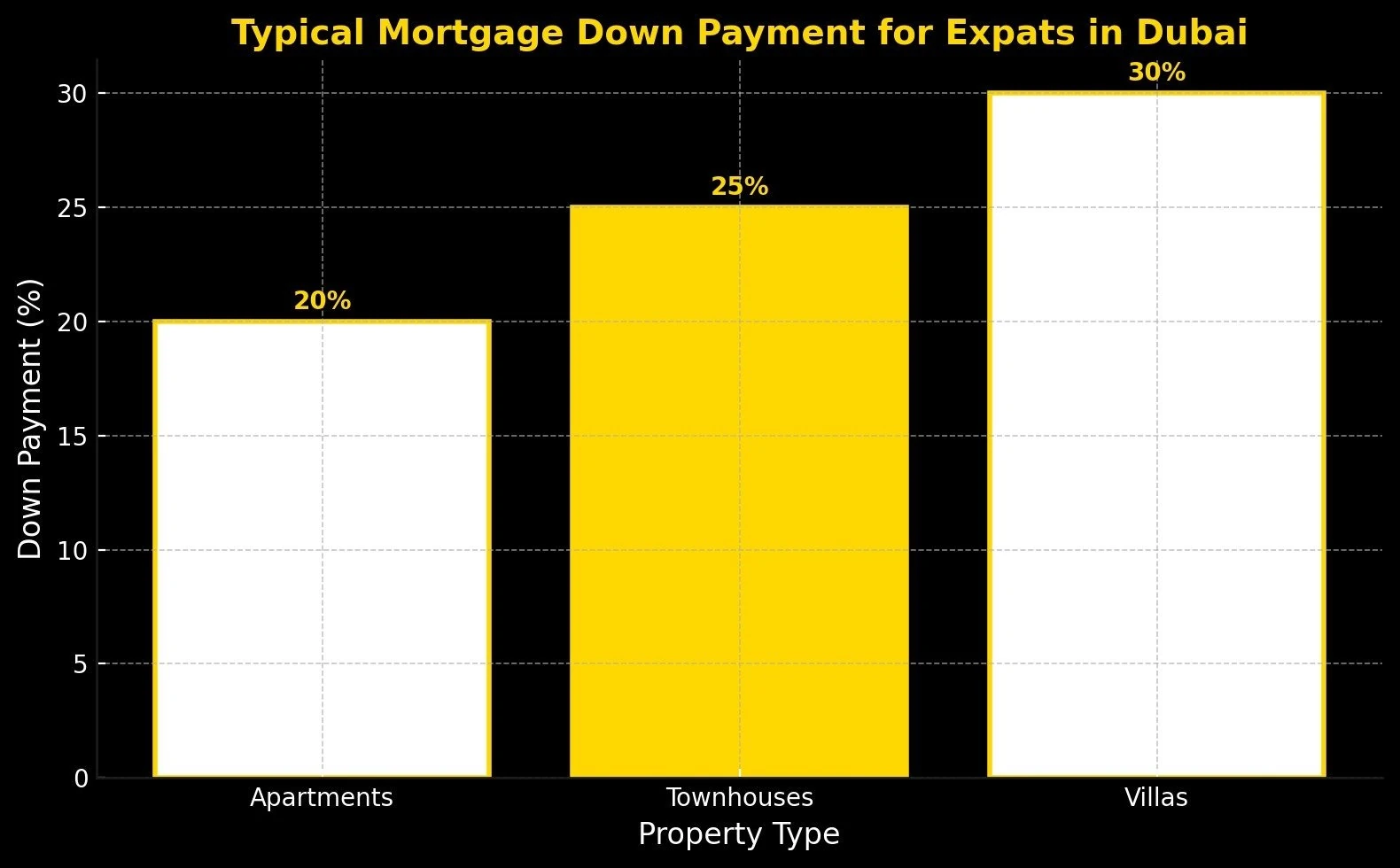
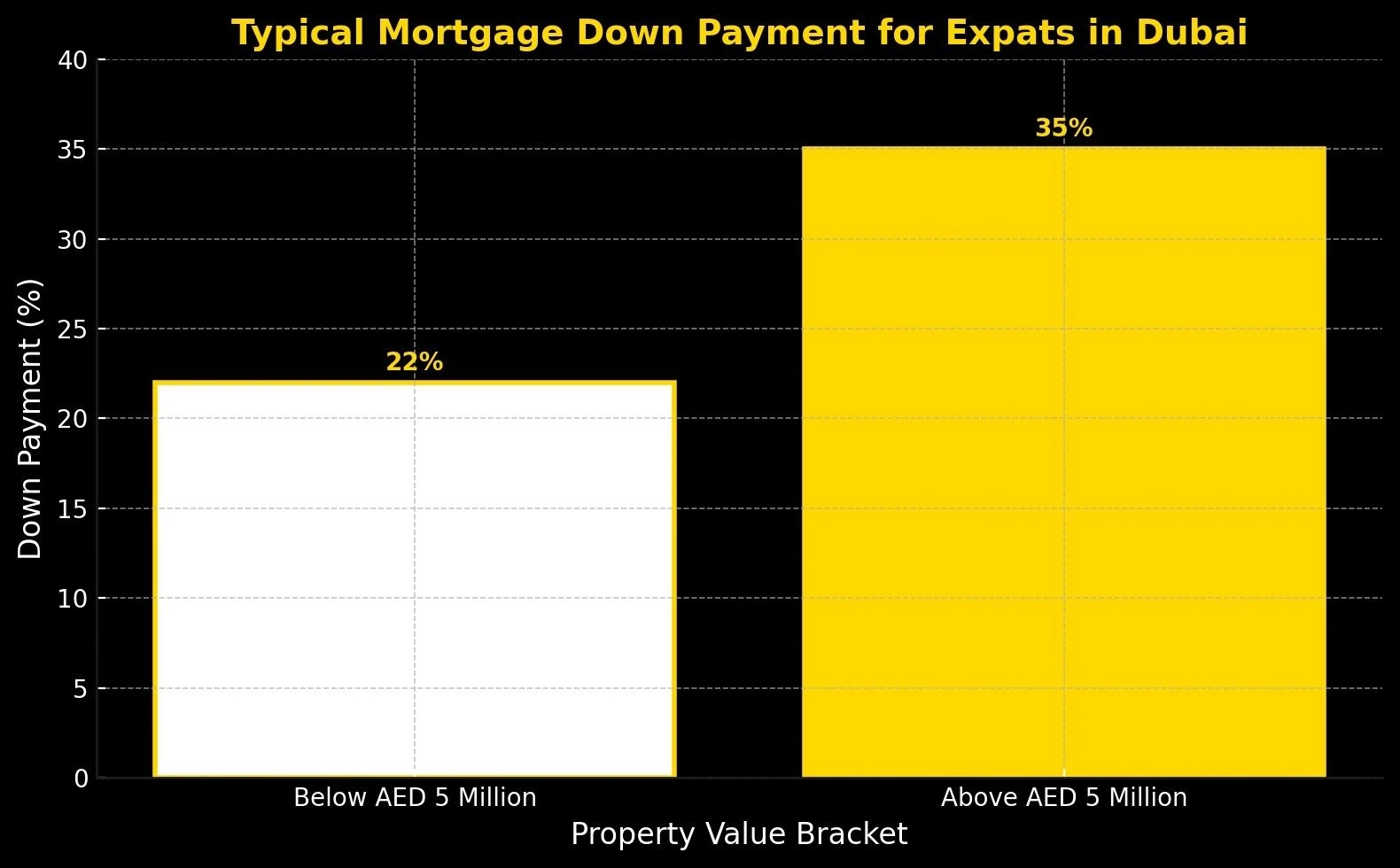
The maximum loan-to-value (LTV) ratio for expats is usually 75-80%, meaning you need a minimum of 20-25% of the property's value as a down payment. The maximum loan term is typically 25 years, up to the age of 65 or 70.
The following chart illustrates the standard down payment requirements for expatriates looking to secure a mortgage in Dubai:
One of the most powerful incentives for foreigners buying property in Dubai is the eligibility for a long-term residency visa, commonly known as the Dubai Golden Visa. This visa grants investors, and often their immediate family members, the right to reside in the UAE for 5 or 10 years, renewable, without the need for a local sponsor.
The property investment required to qualify for the Golden Visa is clearly defined:
This visa provides incredible stability, allows for family sponsorship, and facilitates easier opening of bank accounts and conducting business in the UAE.
Q: Are there any annual property taxes in Dubai?
A: No, there is no annual property tax in Dubai. This is a significant advantage for investors, as it dramatically increases net rental yields. The only recurring costs are relatively low utility bills (DEWA for electricity and water) and annual service charges for the maintenance of communal areas in apartment buildings or communities.
Q: Do I need to be physically present in Dubai to buy a property?
A: While it is highly recommended to view properties in person, it is not strictly mandatory. You can appoint a legally recognized Power of Attorney (POA) to act on your behalf throughout the entire process, from selecting the property to signing the contract at the DLD. Reputable agencies like House & Hedges have extensive experience in facilitating remote purchases for international clients.
Q: What is the role of a real estate agent?
A: A RERA-licensed agent is your guide, negotiator, and facilitator. Their duties include finding suitable properties, verifying listings, conducting viewings, negotiating the price, preparing the MOU, coordinating due diligence (NOC, title checks), and liaising with the DLD for the final transfer. They ensure the entire process is smooth, legal, and in your best interest.
Q: How do I manage my property from abroad?
A: This is a common concern for international investors. The solution is to hire a professional property management company. These companies, often offered by real estate agencies themselves, will handle everything for a fee (typically 5-10% of the annual rental income). Their services include finding and vetting tenants, collecting rent, handling maintenance issues, conducting regular inspections, and managing service charge payments, allowing you to be a completely hands-off owner.
Q: Can you own property in Dubai as a foreigner?
A: Yes. Foreigners can own freehold property in over 60 designated areas, including Dubai Marina, Downtown Dubai, and Palm Jumeirah.
Q: Can you own 100% property in Dubai?
A: Yes. In designated freehold areas, foreigners can have 100% absolute ownership of both the property and the land it is on.
Q: Can I buy a property in Dubai without being a resident?
A: Yes. You do not need to be a UAE resident to buy property in Dubai. The process is open to non-residents and investors worldwide.
Q: How long can you stay in Dubai if you own a property?
A: Owning property does not automatically grant a residence visa. However, if your property meets a minimum value (typically AED 2M / ~$545k USD), you become eligible to apply for a long-term residency visa (the "Golden Visa").
Q: Can a US citizen own a house in Dubai?
A: Yes. US citizens have the same property ownership rights as any other foreign national in Dubai's designated freehold areas.
Q: Can a non-citizen buy property in Dubai?
A: Yes. Dubai's property market is explicitly open to non-citizens and international investors.
Q: What happens to your property in Dubai after 99 years?
A: This applies only to leasehold properties. After the lease expires, ownership reverts to the freeholder (usually the master developer). However, leases are often renewed, and the vast majority of properties available to foreigners are freehold, not leasehold.
Q: Can we buy property in Dubai permanently?
A: Yes. Freehold ownership is permanent. You own the property outright, and it can be passed on to your heirs.
Q: Can US citizens buy property in Dubai?
A: Yes. US citizens are welcome to buy both residential and commercial property in Dubai's freehold areas.
Q: Does buying property in Dubai give you residency?
A: It makes you eligible. Purchasing a property valued at a minimum of AED 2 million is one of the main pathways to qualify for a 10-year UAE Golden Visa, which grants residency.
Investing in Dubai real estate presents a compelling opportunity for foreign nationals seeking portfolio diversification, high passive income, capital growth, and a stable foothold in a global city. The market is characterized by its transparency, high-quality infrastructure, tax-free benefits, and a clear legal framework designed to protect investors.
The added incentive of the Dubai Golden Visa property investment scheme makes it more than just a financial decision; it's a gateway to a new lifestyle.
Whether you are looking for a lucrative buy-to-let apartment, a luxurious holiday home, or a long-term plan for retirement, Dubai's property market offers options for every ambition and budget. While the process is straightforward, partnering with a knowledgeable and experienced real estate advisor is invaluable. They provide local expertise, navigate the legalities on your behalf, and ensure your investment journey is seamless and successful from the first viewing to the moment you hold the keys and beyond.
Ready to find your dream property in Dubai?
Contact our expert international team at House & Hedges today for a personalized consultation. We guide clients from Canada, the USA, the UK, and across the world through every step of the Dubai real estate journey.
📩 Email: info@dubaiislandprojects.com
📱 WhatsApp: +971 52 336 2441
Same-day response from our experienced team — no delays, no hassle.
Let our experts guide you through Dubai's luxury property market with personalized advice
Continue exploring insights about Dubai's real estate market